Gabon Season Opener: Week 3 Fishing Report
3, 2, 1… let’s go! Early flight from London to Libreville, the capital of Gabon. After weeks of preparation and waiting, the excitement is at its peak. The travel goes as smoothly as it can be, with luggage delivered (what a relief!) and only a short wait at the border. The long trip to get the visa at the Gabonese embassy in London was totally worth it.
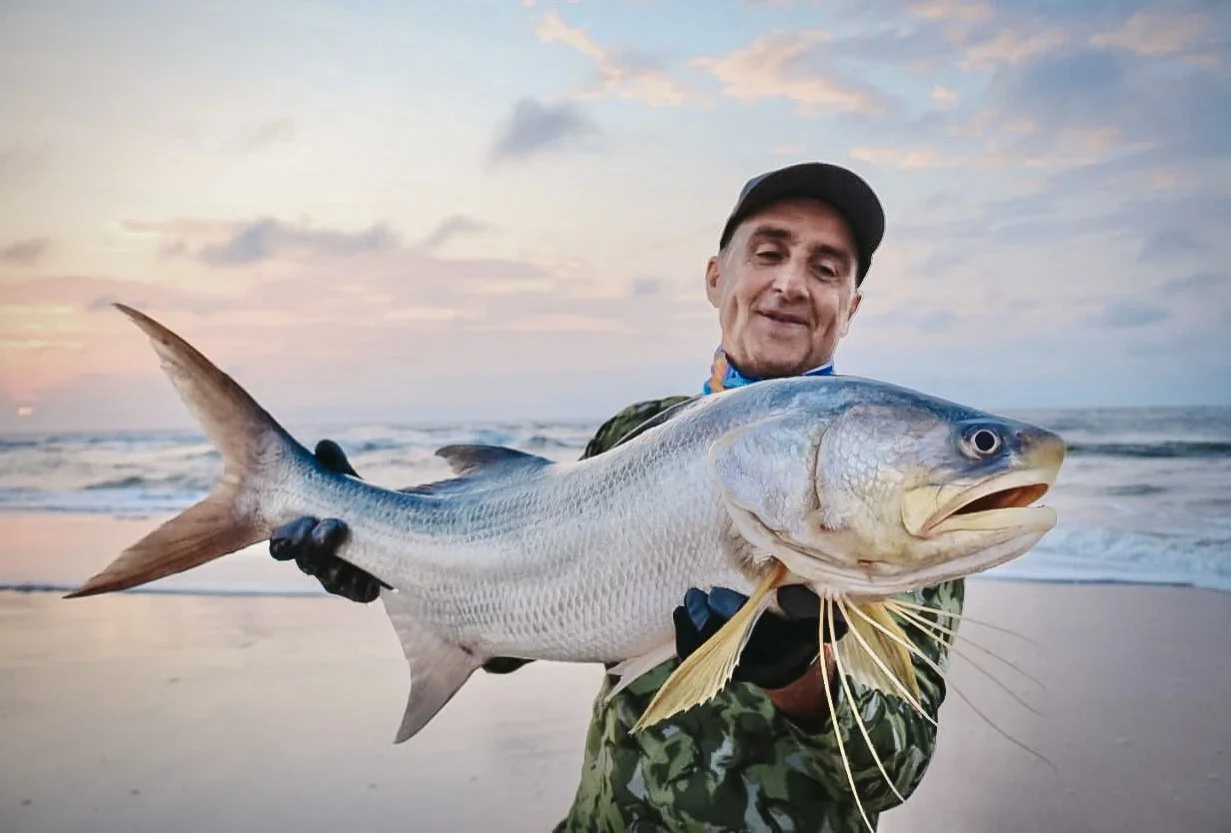
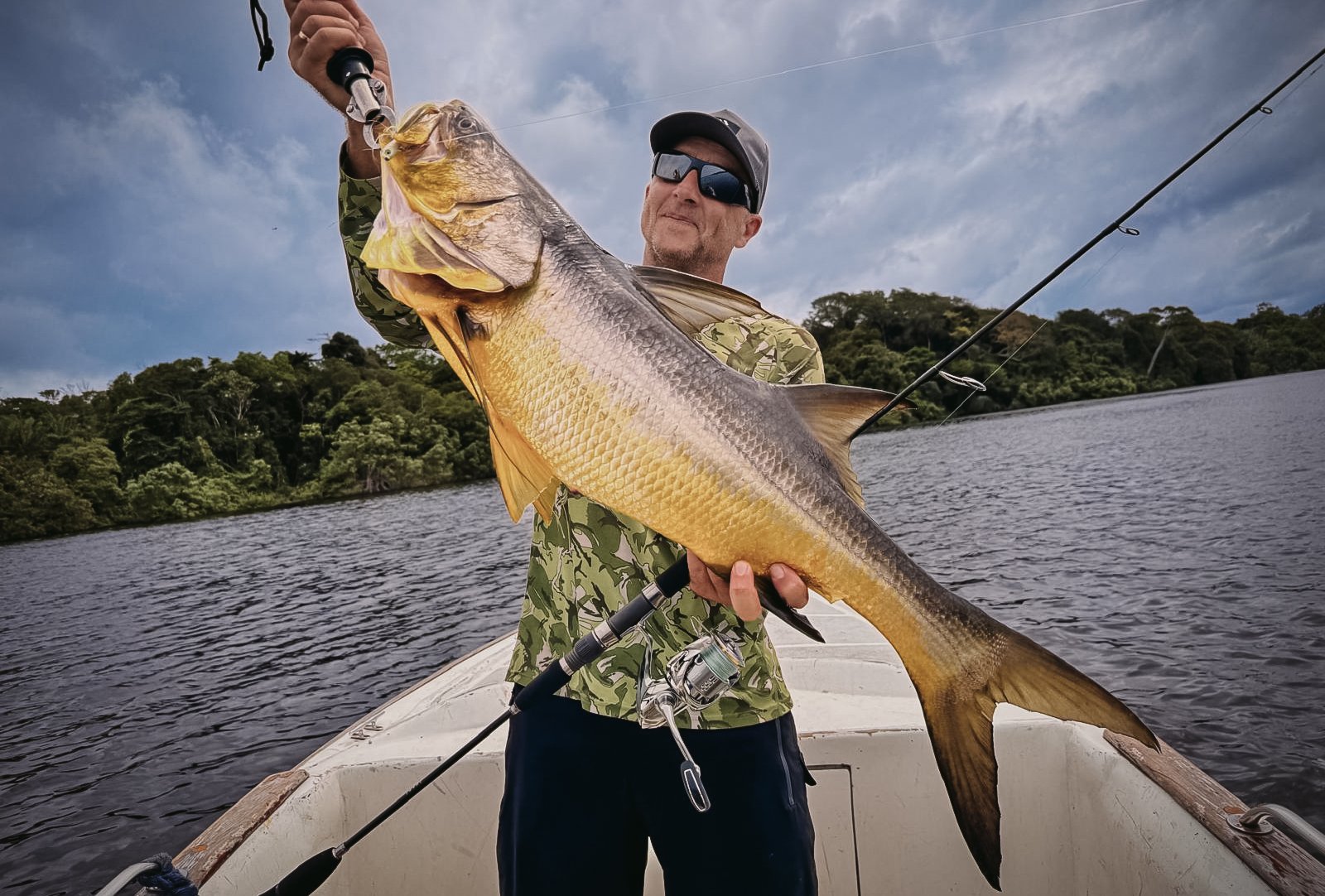
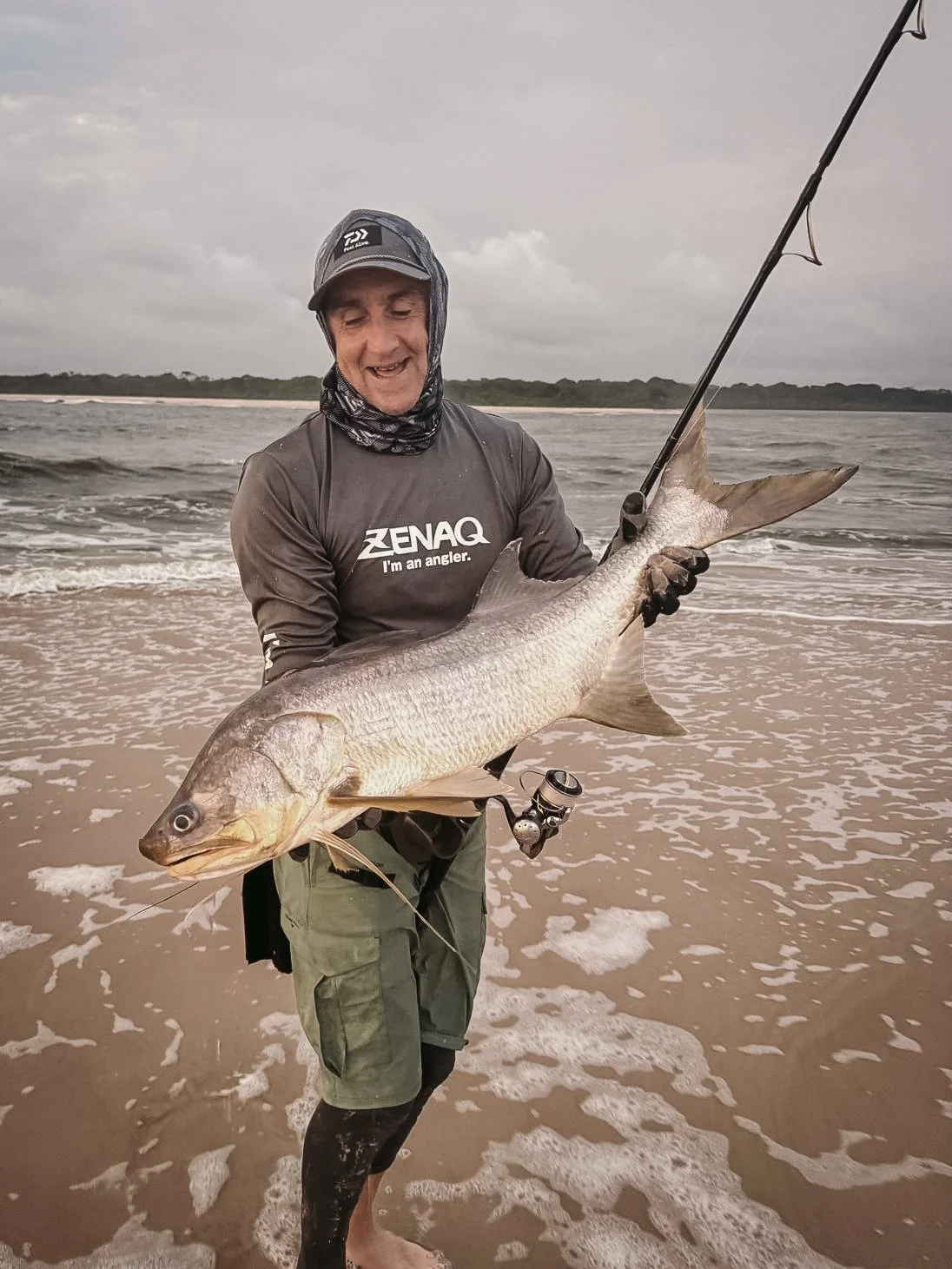
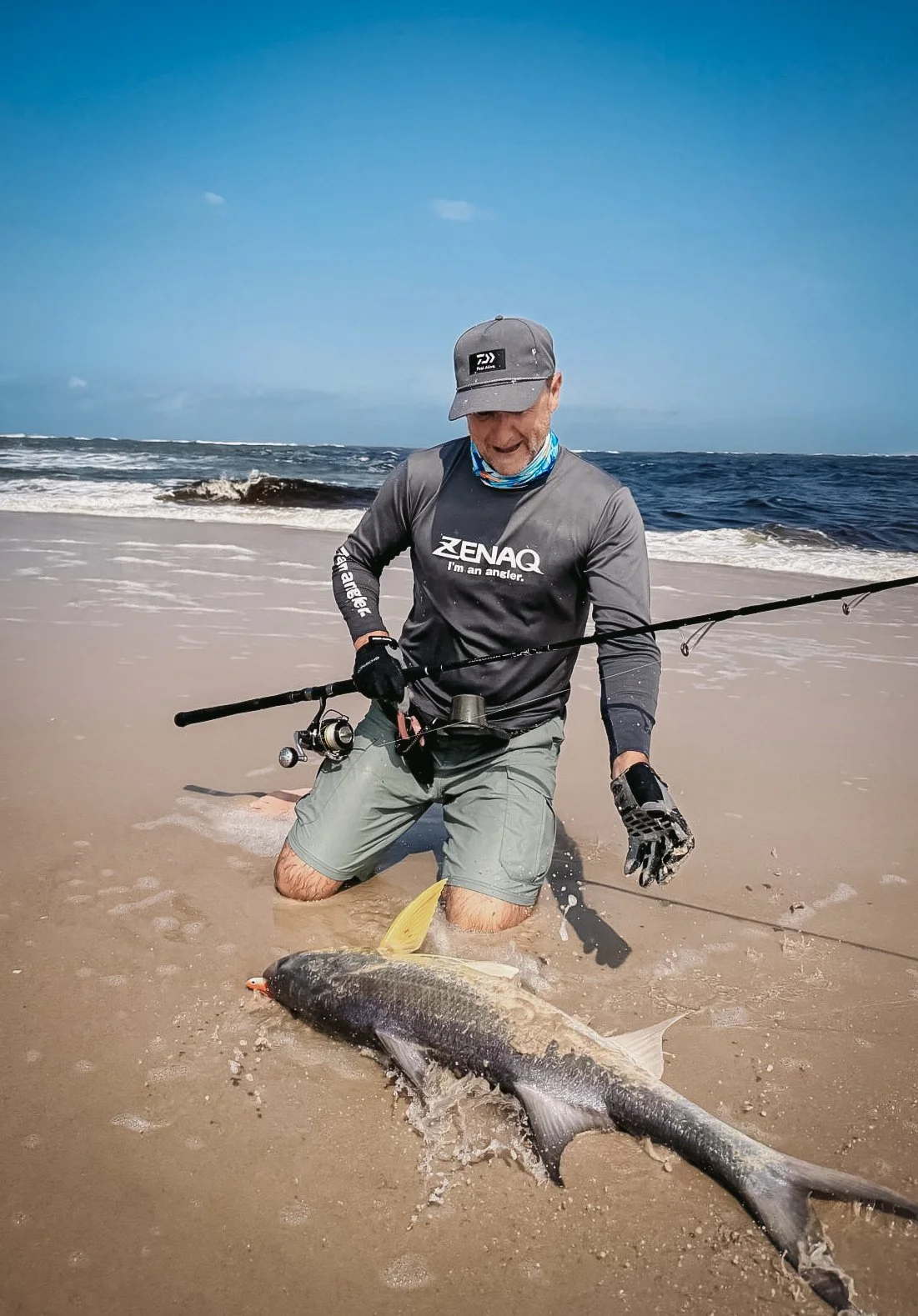
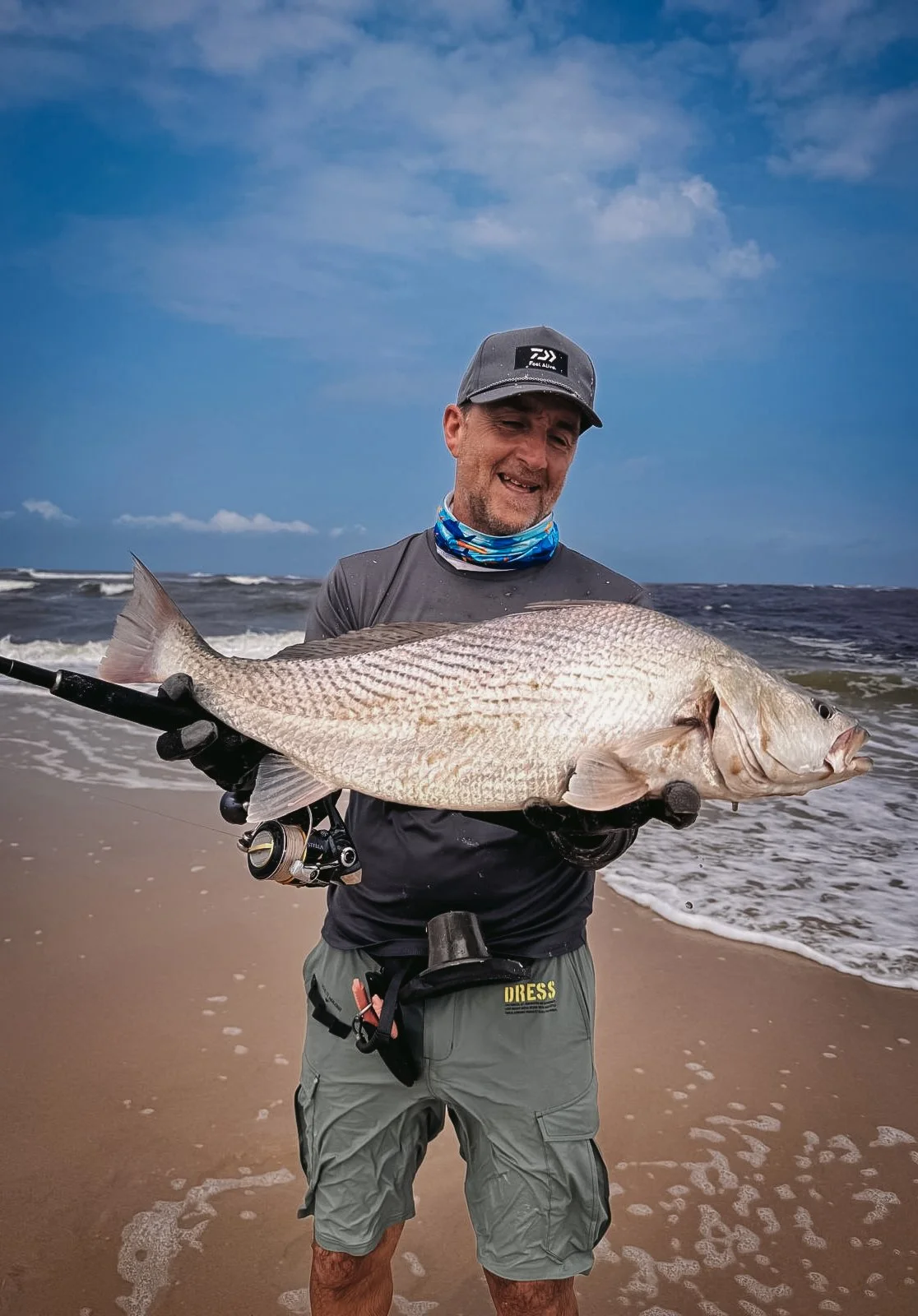
After a night in a chilled hotel on the beach in Libreville, it’s time for the internal flight to Port Gentil and then a couple of hours’ drive before finally arriving at the lodge. Once at the final destination, I just have time to unpack the fishing gear, and off we go to the fishing spot. I decide to start with a small popper. Cast number three, fish on! A nice jack of around 3–4 kg. Not a monster, but definitely a solid fighter, especially in the strong outlet current. After landing another couple of jacks, it’s time to go back to the lodge for a well-deserved rest. Not a bad start!
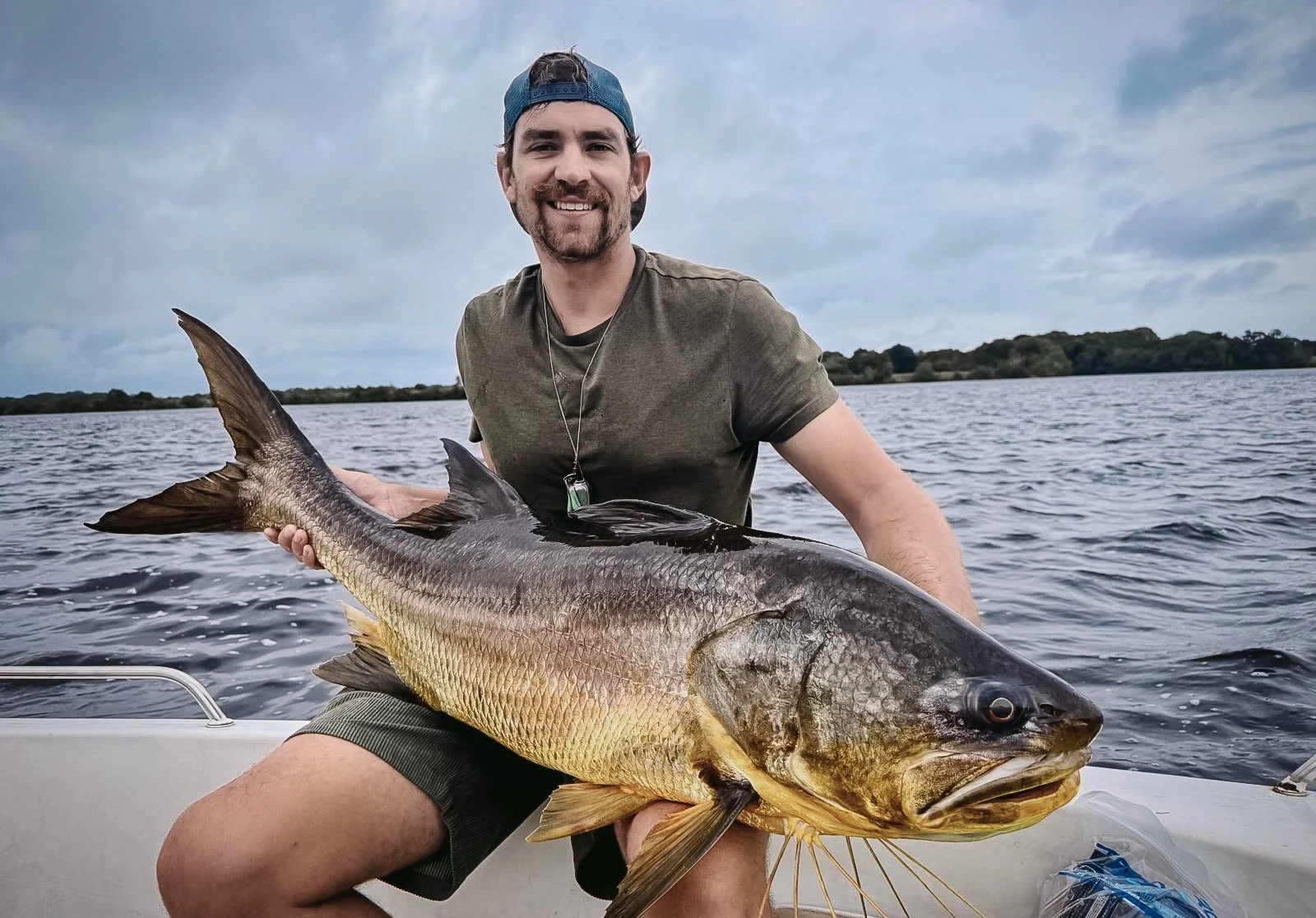
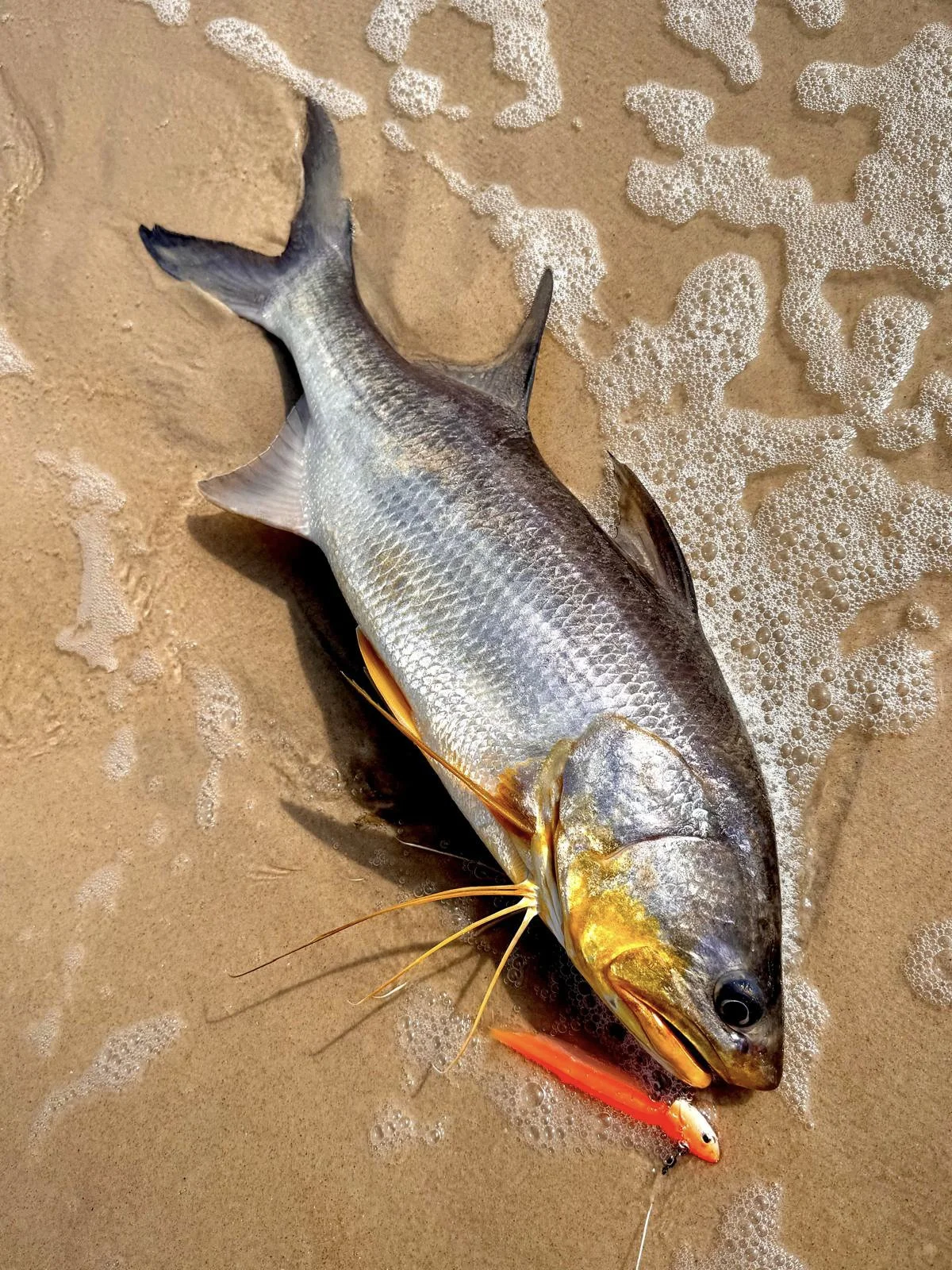
The following day, we start at 3 a.m. in heavy rain. Only a few bites until sunset. Then we start hooking captains, jacks, and finally we spot some tarpons. We get a window of craziness, 30 to 40 minutes, where, between the five of us, we hook 10 tarpons. Unfortunately, we can’t land a single one. But we do land some nice jacks, otoliths, threadfins, and cuberas. In the following days, it’s an alternation of good and bad sessions. It’s crazy how much fishing in Gabon is affected by the weather. Some days we land 20+ fish, and others I get only a couple of attacks. Casting a 100 g lure for hours can be exhausting, but the idea of hooking a big mama tarpon or a large cubera at any moment is a strong motivation not to give up.
More days pass. I hook more tarpons but land none. They told me the average is one tarpon landed every ten hooked. I’m way off: almost 14 hooked and nothing landed. I feel like there’s a spell on me, like it’s already written that I’m only allowed to see them jump with my lure in their mouth for a couple of seconds before they go free.
Eventually, the last day arrives. Early start at 6 a.m. for a three-hour session. Not a single bite. Afternoon session in the lagoon. A couple of small cuberas on a popper, but no sign of tarpon. At dinner before departure, I consider a final session, but after a couple of beers and finally getting all my clothes dry, my motivation is not at its peak. Markus, one of my fishing buddies, convinces me we can’t give up.
“OK, let’s do this.”
Last night, last session, all in. I put only a handful of lures in the bag, grab my raincoat (probably the most valuable thing I had with me on this trip!), and jump on the boat heading to the southern part of the outlet. The sky is clear, and we can finally see the stars and the partially formed moon.
After twenty minutes of fishing, the situation goes out of control. Both Markus and I get a captain fish on almost every cast. Not huge ones, but all between 5 and 15 kg, with the largest around 20 kg. I catch a few, then think: if threadfin are eating, maybe tarpon are too. I switch lures to something that could work for both species. I cast with all my strength into the most tumultuous part of the outlet. I recover one metre of line and, sbam! Fish on! It’s a tarpon! I see it far away, jumping under the moonlight. I’m not letting this one go again, I think. I’ll do everything to land this beast.
But I immediately realise I’m not in control, he is. I run along the beach, trying to stop his sprints by putting my hand on the reel spool. No chance. I’m at his mercy. Pull after pull, he doesn’t get tired while the amount of line on my spool gets lower and lower. I don’t want to give up, but I know something isn’t right. Suddenly, the line breaks. I can’t believe it.
I run back to my bag, grab a new tippet and lure, and head straight back to the same spot. Two casts and sbam! Another tarpon on the line! I’m not losing this one. The fight is tough, but nothing like the previous one. And finally, I land it. At 11:44 p.m., the night before departure, I land my first tarpon. Hell yeah! We’re all too excited to take a proper picture before releasing him. High-fives all around. I wash my hands quickly and start casting again.
I think I cast fewer than four times before hooking another tarpon. The moonlight helps…I can see the fish jumping out of the water. The fight is much harder than the second fish, but still not comparable to the first. Maybe it’s smaller, or maybe I’m just more confident after landing one 15 minutes earlier.
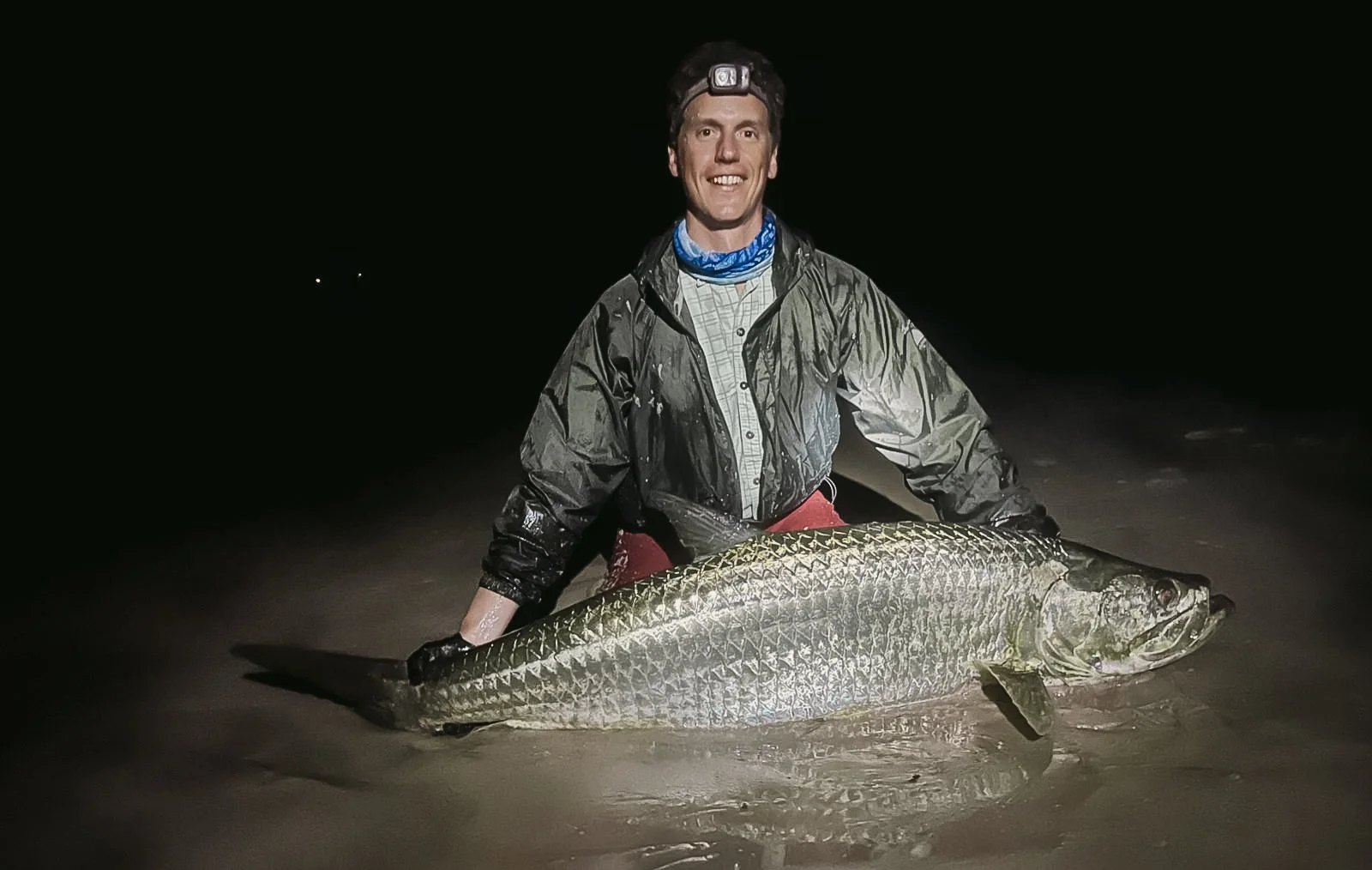
At 12:14 a.m., I land my second tarpon…much larger than the first. I always laughed at people who take pictures with fish on the ground, but once I tried lifting it, I understood why. No chance I could lift that fish without hurting it or myself. We take a bunch of pictures and put it back into the dark water. Weight? Hard to say. Tarpons are thick and heavy without being super long. The guide estimated over 80 kg, but who knows. Looking at the pictures, it doesn’t look massive, but I remind myself that fish often look smaller to me since I’m 2 metres tall and weigh almost 100 kg.
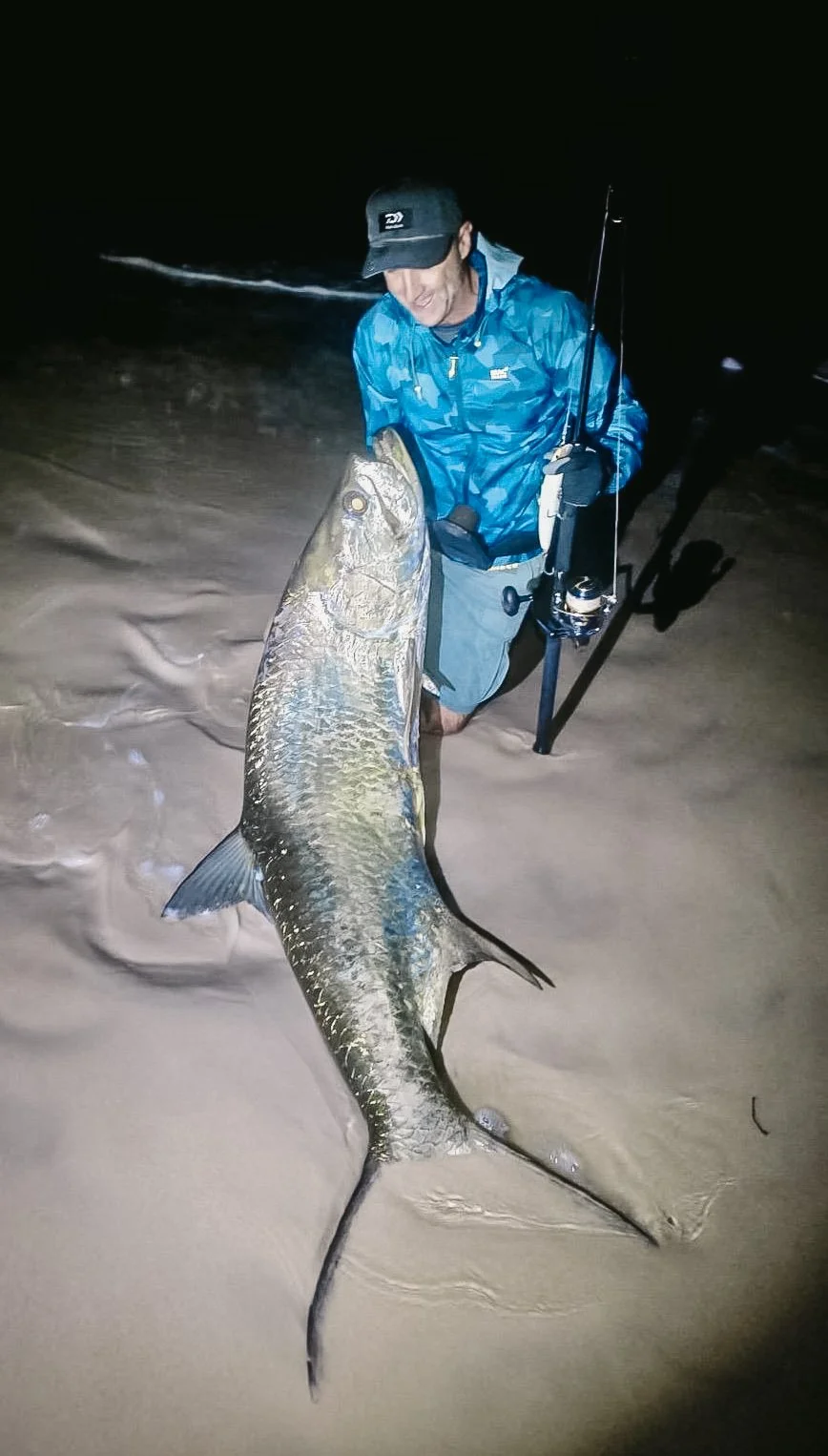
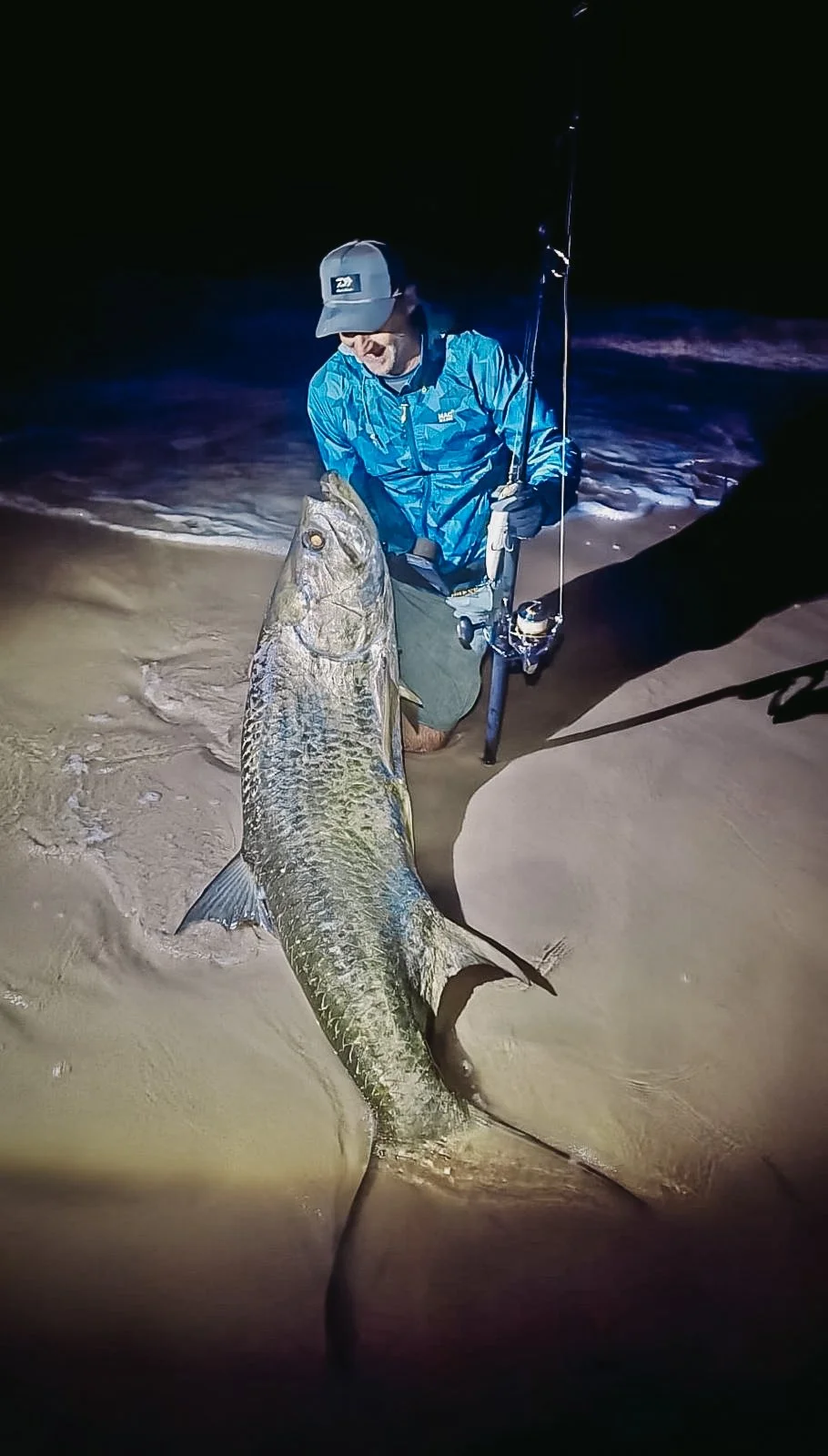
Back to fishing. Less than 20 minutes later, another tarpon on the line. It’s almost 1 a.m., and I’m out of energy. I’m not too motivated for another tough fight; I already have my trophy. In a moment of distraction, I leave the line a bit looser than I should for this type of fish, and off he goes. Honestly, I feel relieved. It’s time to go back to the lodge.
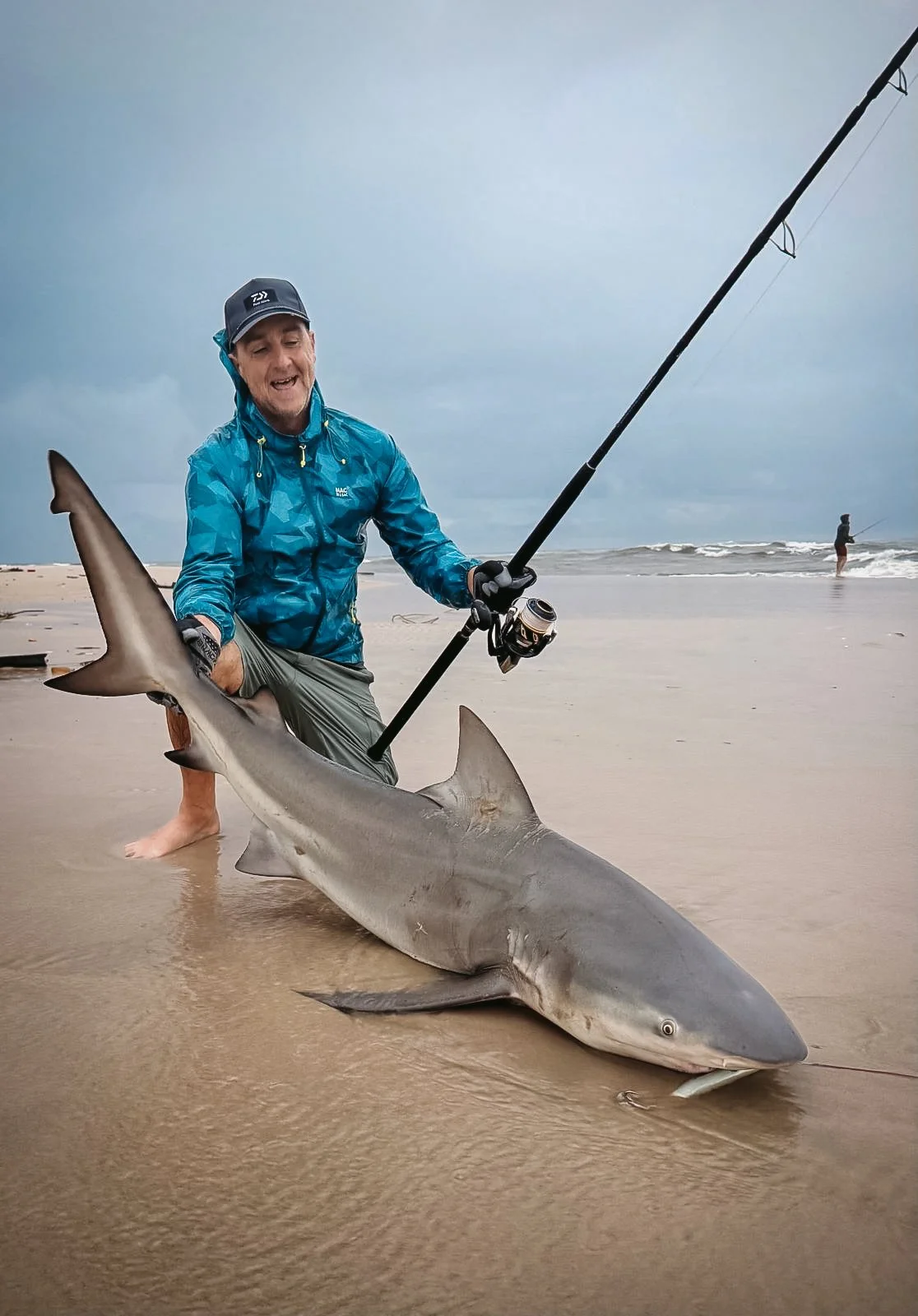
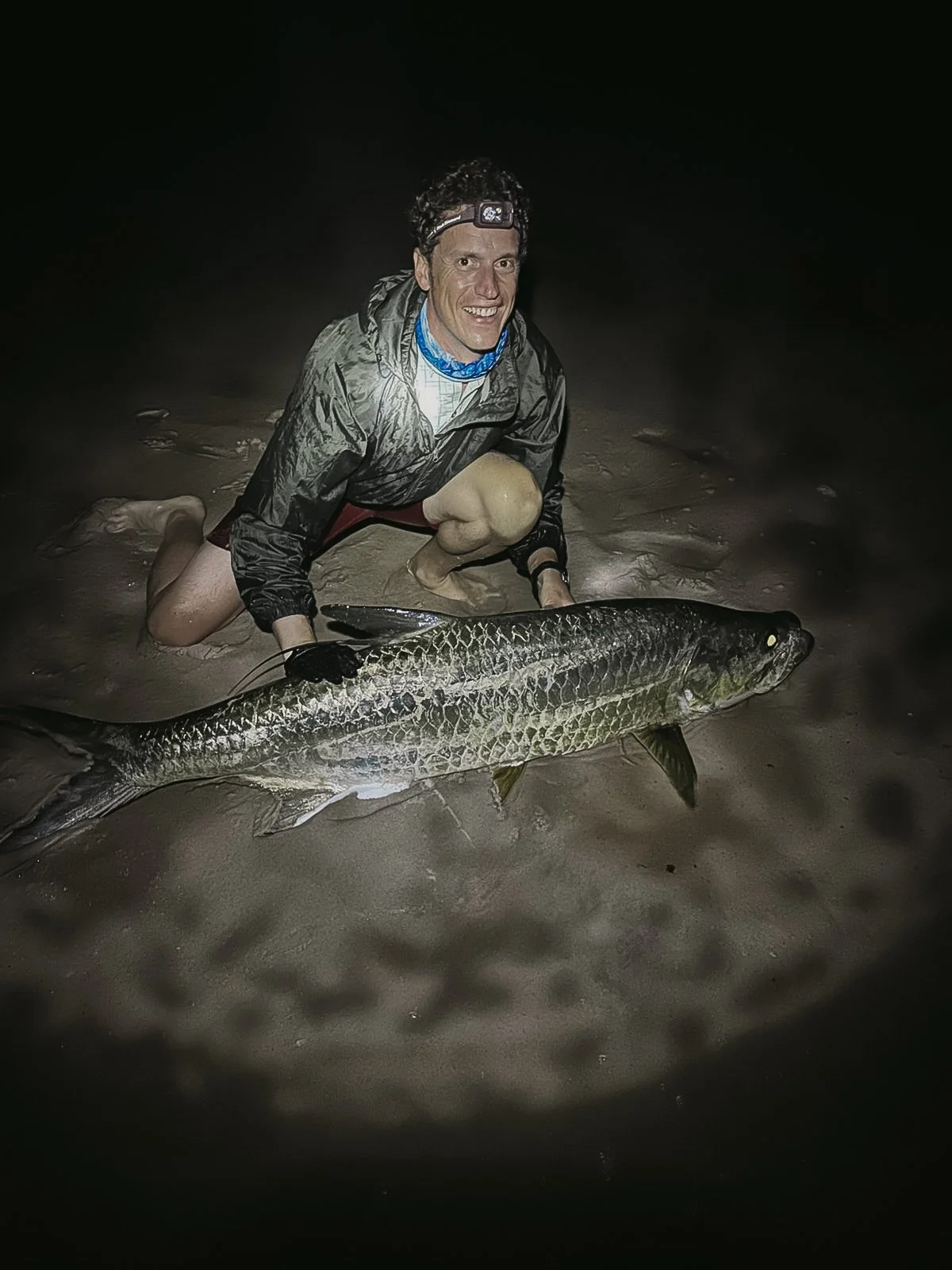
Markus fished with me and also had a tremendous session. No tarpon for him that night, but between landed and hooked, he had around 28–30 captain fish. What a night.
We return to the lodge around 2:30 a.m. I’m totally knackered. I look at the pictures and smile for a few moments just before falling asleep.
Text and photos by Riccardo Auricchio